Effortless TV Mounting Miami: A Step-by-Step Guide to Professional TV Installation Services

TV mounting is a fantastic way to enhance your living room or office space. With the rise of modern flat-screen TVs, mounting them on the wall not only saves space but also provides a sleek, professional look. If you’re looking for TV mounting Miami services, Auxe is your go-to choice. This guide will walk you through the essentials of TV mounting and installation, outlining the benefits, how it works, and why Auxe is your best option.

What Is TV Mounting? Why Should You Consider It?

TV mounting is the process of attaching your television to a wall using a special bracket. This installation method is increasingly popular as it saves space and gives your room a clean, minimalist look. The right installation can transform your living area into an organized entertainment zone.

When you choose TV mounting Miami services, you are opting for a more practical solution. Wall mounting your TV allows you to eliminate bulky TV stands and gives you better viewing angles. This is particularly useful if you want to create a home theater experience or just maximize your space.

At Auxe, we understand the technicalities involved in mounting a TV. Our expert team ensures that your TV is securely fastened, whether it’s for a flat, curved, or ultra-thin model. Our professional approach guarantees that your TV is mounted correctly and safely.

Understanding the Process of TV Installation

TV installation services include more than just mounting your television. It involves several important steps to ensure that your TV is working perfectly once it’s mounted. At Auxe, we take care of everything from start to finish.

First, we assess the space where the TV will be mounted and discuss the best placement options with you. This includes selecting the right wall bracket for your TV size and type. We then handle all the necessary wiring to ensure everything is properly connected, so your TV works seamlessly with other devices like soundbars, game consoles, and cable boxes.

Finally, we make sure that the TV is securely fastened and positioned correctly for optimal viewing. Our team will also help with cable management to prevent unsightly wires and cables from hanging down. The goal is to make your TV setup as clean, functional, and aesthetically pleasing as possible.

The Benefits of Professional TV Mounting Miami Services

There are many reasons to hire a professional for your TV mounting Miami needs. While DIY mounting may seem tempting, it comes with several risks, including incorrect installation or even damaging your wall or TV. Choosing professional TV installation services ensures that the job is done correctly.

  1. Safety First: A professional installer knows how to secure your TV safely to avoid accidents. Proper mounting prevents your TV from falling, which can cause serious damage.
  2. Maximizing Space: A mounted TV saves valuable space and helps you maintain a clutter-free room. You can use the extra space for other purposes, such as storage or additional seating.
  3. Optimal Viewing: Professionals know the best height and angle for mounting your TV, ensuring you get the most comfortable and immersive viewing experience.
  4. Clean Setup: With expert cable management, you won’t have to worry about messy wires and cords distracting from the aesthetic of your room.

Choosing Auxe for your TV mounting Miami service means choosing a company that values precision, safety, and customer satisfaction.

Choosing the Right TV Mounting Service in Miami

When selecting a company for TV mounting Miami, it’s essential to choose an experienced team. There are several factors to consider, such as the type of TV you own, the wall material, and the complexity of the installation.

At Auxe, we pride ourselves on providing high-quality, tailored TV installation services that meet your unique needs. Whether you have a small flat-screen TV or a large, heavy unit, we have the expertise and equipment to handle it all. Our team will also help you choose the right mounting bracket, based on the weight and size of your TV.

Another benefit of working with Auxe is our commitment to customer satisfaction. We take the time to understand your preferences, whether you want your TV mounted above a fireplace or in a corner for better viewing angles.

The Importance of Proper TV Installation Services

Proper TV installation services are crucial for several reasons. Incorrect mounting can lead to your TV falling off the wall, which can be dangerous. Furthermore, poor cable management can cause clutter, making your entertainment area look unorganized.

With Auxe, you can be sure that your TV installation will be done professionally. Our experts not only mount your TV securely but also ensure that all the connections are set up properly. Whether you need to connect a sound system, a game console, or other devices, we will take care of the entire setup.

A well-installed TV can improve your viewing experience. We will position the TV at the best height and angle, reducing glare and making it easier to watch from any seat in the room.

Why Choose Auxe for TV Mounting and Installation in Miami?

Auxe is the trusted name for TV mounting Miami services. We stand out for several reasons:

  1. Experienced Professionals: Our team has years of experience in TV installation and mounting. We have handled all kinds of TV models and wall types, so you can trust us to get the job done right.
  2. Affordable Pricing: We offer competitive prices without compromising on quality. Our services provide great value for money, with no hidden fees or surprise costs.
  3. Customizable Solutions: We work closely with you to ensure that your TV installation meets your needs. From wall placement to cable management, we offer personalized service every step of the way.
  4. Customer Satisfaction: We are committed to providing excellent service. Our goal is to make your TV mounting Miami experience smooth and stress-free.

When you need professional TV installation services, Auxe is here to help. We offer the expertise and quality service that you can rely on.

TV Mounting Miami: A Perfect Solution for Your Home

In Miami, many homeowners and renters face the challenge of maximizing space. One of the best solutions to this issue is TV mounting Miami. Wall-mounted TVs not only save space but also enhance the overall appearance of your room.

Whether you’re working with a small apartment or a large home, mounting your TV on the wall frees up floor space for other uses. It also provides you with a cleaner look, as there are no bulky furniture pieces needed to hold your TV.

For apartment residents in Miami, wall mounting is an especially good option. It ensures that you get the most out of your living space without worrying about damaging furniture or walls. Professional installation ensures that the job is done safely and securely.

How Much Does TV Mounting Miami Cost?

The cost of TV mounting Miami services varies depending on the size and complexity of the installation. Factors like the size of the TV, wall type, and whether additional services like cable management are required can affect the final price.

At Auxe, we offer affordable, upfront pricing. Our team will provide you with a clear estimate before the work begins, so you won’t face any unexpected costs. We are committed to delivering high-quality service at competitive rates.

Get Your TV Mounted Today with Auxe

If you’re ready to enhance your living room or office with a professionally mounted TV, Auxe is the company to call. With our expert TV mounting Miami services, you can trust that your TV will be securely installed, and your entertainment area will look fantastic.

Contact Auxe today to schedule your TV installation services. Let our team of professionals handle your TV mounting needs, ensuring a smooth, stress-free experience from start to finish. For more information or to get started, visit our TV Mounting Miami page or check out our TV Installation Services.

How to Choose the Right Apartment to Buy: A Step-by-Step Guide

Buying an apartment is a significant investment, and the process can feel overwhelming if you don’t know where to start. With the right guidance, however, you can find an apartment that fits your needs, budget, and long-term goals. Here’s a step-by-step guide to help you choose the right apartment to buy.

1. Determine Your Budget

The first and most crucial step in buying an apartment is to determine how much you can afford to spend. Setting a clear budget will help you narrow down your options and avoid wasting time on apartments that are outside your financial reach.

  • Assess Your Finances: Review your savings, income, and debt-to-income ratio. Consider the down payment, closing costs, and other expenses like home insurance and property taxes.
  • Mortgage Pre-Approval: Obtain pre-approval for a mortgage from a bank or lender. This will give you a clearer idea of how much you can borrow and the interest rate you’re likely to get. Having pre-approval also makes you a more competitive buyer.
  • Additional Costs: Remember to include recurring costs such as monthly HOA fees (Homeowners Association fees), utilities, and maintenance fees. These can add a significant amount to your monthly budget.

2. Choose Your Desired Location

The location of your apartment will significantly impact your quality of life. Consider the following factors when choosing a location:

  • Proximity to Work/School: Look for an apartment that is conveniently located close to your workplace, school, or other frequent destinations. A shorter commute can save you time and money.
  • Public Transportation: If you don’t own a car, check the availability of public transportation options like buses, subways, or trains. Proximity to transportation hubs can add value to your property as well.
  • Neighborhood Safety: Research the crime rate in the area. Websites like NeighborhoodScout and local police stations can provide detailed crime statistics.
  • Amenities and Services: Consider the nearby amenities, such as grocery stores, shopping centers, parks, gyms, and hospitals. These factors can enhance your lifestyle and the value of your property.
  • Future Development: Research any future development plans for the area. Are new commercial or residential buildings being planned nearby? This could impact the value of the property and your living experience.

3. Decide on the Type of Apartment

There are various types of apartments, each with its own pros and cons. Decide which type suits your lifestyle and needs:

  • Studio Apartments: A single-room living space that combines the kitchen, living, and sleeping areas. These are ideal for individuals or couples who prefer a more affordable option.
  • One-Bedroom Apartments: Suitable for small families or professionals who need more space and privacy. A one-bedroom apartment offers more room for living and storage.
  • Two-Bedroom Apartments: Perfect for families, roommates, or those who need an office or guest room. They typically offer more space and better value than one-bedroom apartments.
  • Loft Apartments: Loft apartments have an open floor plan with high ceilings and large windows. They can be ideal for people looking for a modern, urban living space with a unique aesthetic.
  • Duplex/Triplex Apartments: These apartments have two or more levels and provide more space and privacy. They’re perfect for larger families or those who want a home-like feel in an apartment setting.

4. Check the Building’s Condition and Age

Before making an offer, carefully inspect the condition and age of the apartment building. Older buildings may come with maintenance issues, but they can also have character and offer more space for the price.

  • Inspect Common Areas: Evaluate the building’s common areas, such as hallways, elevators, parking areas, and amenities like gyms or pools. Are they well-maintained? This will give you an idea of how well the building is managed.
  • Age of the Building: Older buildings may have charm and be more affordable, but they could require costly updates and repairs. Consider the age of the building and whether it has been renovated or maintained regularly.
  • Maintenance and Repairs: Look for any signs of issues like water damage, cracks in the walls, or outdated plumbing and electrical systems. These problems could lead to high maintenance costs down the road.

5. Evaluate the Apartment’s Layout

The layout of the apartment plays a huge role in how comfortable and functional it will be. Think about how the space flows and whether it suits your lifestyle.

  • Room Sizes: Are the rooms spacious enough for your furniture and personal items? Measure key rooms (living room, bedroom, kitchen) to ensure they meet your needs.
  • Flow of Space: Does the apartment have an open, airy feel or does it feel cramped? A good layout will make the space feel larger and more functional.
  • Storage Space: Ensure there’s enough closet space and additional storage options, especially if you have a lot of belongings. Check the closet size in bedrooms, hallway storage, and kitchen cabinets.

6. Inspect the Neighborhood and Surroundings

Even though the apartment may meet your needs, the surrounding neighborhood and environment can greatly influence your living experience. Here’s what to consider:

  • Noise Levels: Visit the apartment at different times of the day to gauge the noise level. Is it quiet or noisy? Pay attention to the sounds from traffic, neighboring buildings, or nearby bars and restaurants.
  • Neighborhood Vibe: Walk around the neighborhood to get a sense of the community. Is it lively, quiet, or somewhere in between? Is it well-maintained and clean?
  • Parking and Accessibility: If you have a car, ensure there’s adequate parking. Is there assigned parking or street parking available? If public transport is important to you, confirm the convenience and proximity to stops.

7. Check the Financials: HOA Fees and Taxes

Before finalizing your decision, make sure you understand all the costs associated with the apartment. Beyond the purchase price, there may be additional fees that affect your budget:

  • HOA Fees: Many apartment complexes charge monthly Homeowners Association (HOA) fees, which cover building maintenance, common area cleaning, security, and amenities. These fees can add up, so make sure to inquire about them upfront.
  • Property Taxes: Research the property taxes in the area to understand the full financial commitment. Taxes can vary widely depending on the location and value of the apartment.
  • Insurance: Homeowner’s insurance is typically required, which can add to your monthly expenses. Make sure to include this in your budget.

8. Conduct a Final Walkthrough

Once you’ve selected the apartment you’d like to buy, schedule a final walkthrough before making an offer. This is your last chance to inspect the property and ensure everything is in order.

  • Check for Issues: Look for any maintenance issues, such as plumbing problems, cracks in walls, or faulty appliances. Make a note of any issues you want to address before closing.
  • Confirm All Terms: Ensure that all verbal agreements or promises made by the seller or real estate agent are included in the contract.

Key Takeaways

  • Set a clear budget to avoid overspending and factor in all associated costs (mortgage, HOA fees, taxes).
  • Choose the right location based on proximity to work, amenities, and overall neighborhood safety.
  • Consider the apartment’s layout to ensure it fits your lifestyle and needs for space and storage.
  • Inspect the building and neighborhood for potential issues or disturbances before making an offer.
  • Understand all the financial aspects, including HOA fees, taxes, and insurance, to avoid unexpected costs down the line.

By following these steps, you’ll be well-equipped to make a confident, informed decision when choosing the right apartment to buy. Take your time, do your research, and ensure that the apartment you choose meets your current needs and long-term goals. Happy house hunting!

Top Benefits of Pathology Lab Software for Streamlined Patient Diagnostics

In the healthcare industry, pathology labs serve as the backbone of diagnostics, providing essential test results that guide treatment decisions. With the increasing volume and complexity of diagnostic tests, pathology labs are under pressure to ensure quick turnaround times, accurate results, and regulatory compliance. This is where pathology lab software, particularly Laboratory Information Management Systems (LIMS), comes into play. These specialized software solutions can significantly improve the efficiency, accuracy, and overall functioning of pathology labs. This article highlights the top benefits of pathology lab software in streamlining patient diagnostics.

1. Enhanced Accuracy and Reduced Human Errors

Human errors in sample handling, data entry, and result interpretation can significantly impact diagnostic outcomes. Pathology lab software minimizes these errors by automating key processes, ensuring that the right data is captured, tracked, and reported accurately.

  • Example: Automatic sample tracking and data entry from laboratory instruments reduce the likelihood of transcription errors, ensuring that patient results are precise and reliable.

Key Benefit: By eliminating manual processes, pathology software ensures consistent and accurate data handling, which is critical for accurate diagnoses.

2. Faster Turnaround Times

In a pathology lab, quick delivery of test results is often crucial for timely medical intervention. Pathology lab software streamlines the entire diagnostic process, from sample receipt to test result reporting, significantly reducing turnaround times.

  • Example: Once a sample is collected, the software automatically assigns the relevant tests and sends the results directly to the system, enabling faster reporting without waiting for manual interventions.

Key Benefit: Faster turnaround times mean that physicians receive test results more quickly, allowing them to make timely decisions about patient care.

3. Improved Sample Tracking and Management

Pathology labs handle a large number of samples every day, and managing them manually can lead to mix-ups and delays. Pathology lab software integrates sample management, ensuring that each sample is tracked from collection through testing, with real-time updates on its status.

  • Example: Barcodes or unique identifiers are assigned to each sample. As the sample progresses through different stages, the software provides real-time tracking, ensuring that nothing is misplaced.

Key Benefit: Streamlined sample tracking reduces errors and increases overall efficiency, making it easier for lab technicians to manage large volumes of samples.

4. Real-Time Data Access

One of the most valuable aspects of pathology lab software is the ability to provide real-time access to diagnostic data. This feature allows lab technicians, pathologists, and physicians to view results, track sample status, and access critical information instantly from anywhere, anytime.

  • Example: Physicians can access patient test results directly from the lab software, enabling them to make informed decisions quickly, even while on the go.

Key Benefit: Real-time data access ensures that the lab’s findings are available to healthcare professionals when they need them, reducing delays in diagnosis and treatment.

5. Comprehensive Reporting and Analytics

Pathology lab software offers powerful reporting tools that can generate customized reports for different stakeholders—lab managers, clinicians, and patients. The software can automatically generate detailed diagnostic reports, making it easier to identify trends, track lab performance, and maintain regulatory compliance.

  • Example: A lab manager can run an automated report on lab productivity, such as turnaround times, sample volumes, and error rates, to identify areas for improvement.

Key Benefit: Enhanced reporting capabilities help labs improve internal operations, monitor performance, and stay compliant with industry regulations.

6. Regulatory Compliance and Security

Pathology labs are subject to strict regulations regarding data privacy, patient confidentiality, and quality assurance. Lab software helps ensure compliance with regulations such as HIPAA, CLIA, and ISO standards by securely storing patient data, maintaining audit trails, and automating compliance-related tasks.

  • Example: The software ensures that all patient records are securely stored and only accessible by authorized personnel, reducing the risk of data breaches and ensuring HIPAA compliance.

Key Benefit: Pathology lab software helps labs meet regulatory requirements, avoid legal penalties, and protect sensitive patient information.

7. Seamless Integration with Other Healthcare Systems

Modern pathology lab software integrates with other healthcare systems, such as Electronic Health Records (EHR) and Hospital Information Systems (HIS), providing a holistic view of a patient’s health data. This integration helps ensure that test results are seamlessly shared with other healthcare providers, enhancing collaboration and improving patient care.

  • Example: A pathologist can send test results directly to the EHR system, which is immediately accessible to the patient’s primary care physician.

Key Benefit: Seamless integration with other healthcare systems enhances collaboration between various departments, enabling better-coordinated patient care.

8. Cost Efficiency and Resource Optimization

Pathology labs face the constant challenge of managing costs while maintaining quality. Lab software helps optimize resource use, whether it’s managing inventory, minimizing test duplication, or ensuring optimal staffing levels.

  • Example: Pathology software can track reagent usage and alert lab managers when supplies are running low, preventing stockouts and reducing waste.

Key Benefit: By automating inventory management and optimizing resources, pathology labs can reduce operational costs while maintaining quality service.

9. Better Communication and Collaboration

Clear communication is essential in a pathology lab, especially when results need to be shared with various stakeholders, such as lab technicians, physicians, and patients. Pathology lab software streamlines communication by providing centralized access to data, reports, and updates.

  • Example: When a test result is ready, the software can automatically notify the physician via email or text message, ensuring that results are delivered promptly.

Key Benefit: Pathology software improves communication within the lab and with external healthcare providers, leading to faster diagnoses and better patient care.

10. Enhanced Patient Experience

Ultimately, the goal of pathology lab software is to improve the patient experience. By providing quicker, more accurate results, reducing errors, and enhancing communication, labs can ensure that patients receive the best possible care.

  • Example: With automated test result notifications and fast turnaround times, patients can receive timely updates on their health status, reducing anxiety and uncertainty.

Key Benefit: Improved efficiency, accuracy, and communication contribute to a more positive patient experience, fostering trust in the healthcare system.

Key Takeaways

  • Pathology lab software automates and streamlines key diagnostic processes, improving workflow and efficiency.
  • It reduces human errors and enhances data accuracy, ensuring more reliable test results.
  • Real-time access to data and customized reporting speeds up decision-making and improves diagnostics.
  • Software helps maintain regulatory compliance, ensuring patient data security and adherence to industry standards.
  • Integration with healthcare systems enhances collaboration and coordination, improving patient care.

Conclusion

Pathology lab software is essential for modern labs aiming to improve diagnostic accuracy, speed, and efficiency. By automating routine tasks, streamlining workflows, and ensuring compliance, it not only enhances the quality of patient care but also supports better operational performance. Investing in pathology lab software can help labs meet the growing demands of the healthcare sector, providing faster, more accurate results and ultimately leading to better patient outcomes.

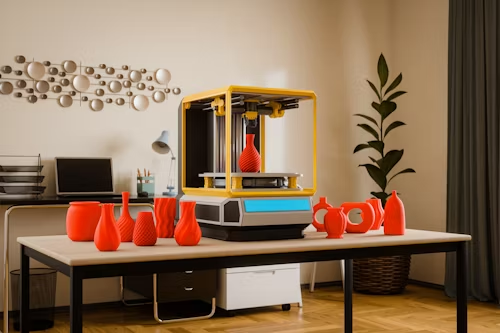
The Benefits of 3D Printing for Small Businesses and Startups

In today’s fast-paced business world, small businesses and startups need to innovate constantly to stay ahead of the competition. With 3D printing technology evolving at a rapid pace, it has become a game-changer for small enterprises looking to scale efficiently, reduce costs, and differentiate themselves in the market.

From prototyping new products to offering customized solutions, 3D printing opens up new avenues for growth, creativity, and operational efficiency. In this article, we will explore the key benefits of 3D printing for small businesses and startups and how it can fuel their success in a competitive landscape.

1. Cost-Effective Prototyping and Product Development

For small businesses and startups, product development often comes with high costs, particularly when it involves physical prototypes. Traditionally, prototyping could require significant investment in molds, tooling, and labor. However, 3D printing drastically reduces the cost and time involved in creating prototypes.

  • Rapid Prototyping: With 3D printing, small businesses can quickly design, test, and iterate their product prototypes, often within a matter of hours or days. This allows businesses to test new ideas and make changes without the high costs of traditional manufacturing.
  • Low Investment: Unlike traditional prototyping methods that require expensive equipment, 3D printers are accessible for small budgets, allowing entrepreneurs to create prototypes in-house, eliminating the need to outsource production.
  • Flexibility in Design: 3D printing allows for much greater flexibility in design, enabling small businesses to make adjustments easily. Designers can create complex shapes and detailed structures that would be difficult to achieve using traditional methods.

With reduced prototyping costs and faster turnaround times, startups can go from concept to product launch more efficiently.

2. Low-Volume Production and Customization

Small businesses often face challenges when it comes to scaling production. Traditional manufacturing methods may require large production runs, creating excess inventory and driving up costs. 3D printing is ideal for low-volume production, offering businesses the flexibility to produce exactly what they need, when they need it.

  • On-Demand Production: 3D printing allows businesses to produce products on demand. Whether it’s limited-run products, spare parts, or seasonal items, businesses can manufacture exactly the quantity needed, reducing waste and storage costs.
  • Customization: The ability to easily customize products is another advantage of 3D printing. Small businesses can offer personalized products to meet customer preferences, from unique designs and engravings to entirely custom-made items. This can be a significant differentiator in a crowded market, allowing businesses to target niche audiences.
  • Cost-Effective Short Runs: For businesses that don’t require mass production, 3D printing offers a low-cost solution. Creating small quantities of products for a specific order or limited edition is much more affordable than traditional methods.

Whether it’s limited edition products or customer personalization, 3D printing enables small businesses to meet consumer demand while keeping production costs low.

3. Streamlined Supply Chain and Faster Time-to-Market

One of the biggest challenges faced by small businesses and startups is the time it takes to bring a product to market. From designing a product to manufacturing it and getting it on store shelves, the process can be slow and expensive. 3D printing accelerates this process and streamlines supply chain operations.

  • Localized Production: Small businesses can manufacture products or components in-house, reducing the need for overseas suppliers and long shipping times. This allows them to respond more quickly to market demands and customer orders.
  • Faster Iterations: Because prototypes can be produced in hours or days, businesses can iterate and improve designs without waiting weeks for traditional production. This enables faster development cycles and a quicker path from concept to market.
  • Reduced Lead Times: With 3D printing, businesses don’t need to wait for manufacturing runs or third-party suppliers. Parts and products can be created on demand, helping reduce lead times and making the business more agile.

By adopting 3D printing, small businesses can shorten time-to-market, create products faster, and respond more flexibly to consumer needs, gaining a competitive edge.

4. Reduced Inventory and Storage Costs

Managing inventory is a significant challenge for small businesses, especially when dealing with seasonal fluctuations or a wide range of products. 3D printing allows businesses to print products as needed, reducing the need to stock large amounts of inventory.

  • Print-on-Demand: Instead of committing to large inventories of parts, products, or components, businesses can print them only when needed. This not only reduces the costs associated with excess stock but also frees up storage space, which can be a major overhead for small businesses.
  • Inventory Management: With 3D printing, businesses can manufacture spare parts or components when required, without the need to maintain a large stockpile. For example, small manufacturers or businesses that rely on custom parts can print only the necessary items as demand arises.
  • Reduced Waste: As 3D printing uses only the material needed for production, there is less waste compared to traditional manufacturing processes. This reduction in waste aligns with both cost-efficiency and environmental sustainability, making it an attractive option for small businesses focused on reducing their carbon footprint.

With on-demand manufacturing and reduced storage costs, small businesses can keep their operations lean and agile while improving cash flow and operational efficiency.

5. Enhanced Innovation and Competitive Advantage

Small businesses thrive on innovation, and 3D printing offers unprecedented freedom to experiment with new designs and product concepts. This technology enables businesses to bring their creative visions to life, whether it’s through custom products, unique materials, or unconventional designs.

  • Creative Freedom: 3D printing allows businesses to explore complex designs that would be difficult, if not impossible, to achieve with traditional manufacturing methods. This opens up new possibilities for innovation and product differentiation.
  • Rapid Prototyping for Testing: Entrepreneurs can quickly develop and test ideas in a cost-effective manner, adjusting designs based on user feedback or market needs. This iterative approach to product development enables businesses to stay ahead of the curve.
  • Niche Markets: 3D printing allows small businesses to cater to niche markets with highly specialized products. From customized accessories to bespoke furniture, businesses can create unique items that aren’t available from mass manufacturers.

By leveraging 3D printing technology, small businesses can enhance their competitive advantage, offering innovative, customized products that attract customers and build brand loyalty.

Conclusion

3D printing is empowering small businesses and startups to compete on a level playing field with larger enterprises. With its cost-effective prototyping, customization options, efficient production processes, and ability to foster innovation, 3D printing is opening new doors for entrepreneurs to scale quickly, reduce costs, and meet customer demands with precision.

By adopting 3D printing, small businesses can not only improve their operational efficiency but also accelerate time-to-market, giving them the agility they need to succeed in today’s fast-paced, competitive market. As the technology continues to evolve, its potential to reshape industries, empower startups, and unlock creative possibilities will only grow.

Key Takeaways:

  • 3D printing helps small businesses with affordable prototyping and rapid product development.
  • It allows for low-volume production, enabling customization and personalization.
  • Faster time-to-market and streamlined supply chains provide startups with a competitive edge.
  • Reduced inventory costs and minimal waste help businesses improve efficiency and reduce overhead.
  • 3D printing fosters innovation, allowing businesses to experiment with creative designs and tap into niche markets.