The Ultimate Guide to Faster File Management and Productivity

Modern users need reliable office tools that can handle documents, spreadsheets, presentations, and PDFs without slowing down their workflow. Whether you are a student, freelancer, or business owner, choosing the right productivity software can improve efficiency and save valuable time. One of the most popular choices today is WPS下载, known for its lightweight performance and user-friendly interface.

Unlike bulky office applications, this software provides a smooth experience even on low-end devices. It supports multiple file formats, making it easier to open, edit, and share documents across different platforms. Many professionals prefer it because it combines essential office features in one package without consuming too many system resources.

Why People Prefer Modern Office Suites

A good office suite should offer speed, compatibility, and convenience. Users today expect seamless synchronization between mobile devices and desktop systems. Cloud integration has also become a major requirement because it allows documents to be accessed from anywhere.

Another important factor is file compatibility. Many users work with DOCX, XLSX, PPTX, and PDF formats daily. Software that can handle all these file types without formatting issues becomes a practical solution for both personal and professional tasks.

Security is also essential. Reliable productivity tools include encryption features and secure cloud storage options to protect sensitive files from unauthorized access.

Features That Improve Productivity

One of the biggest advantages of modern office software is the availability of built-in tools. Instead of installing separate applications for writing, spreadsheets, and presentations, users can manage everything in one place.

Key features often include:

  • Document editing with advanced formatting options
  • Spreadsheet calculations and chart creation
  • Presentation templates for professional slideshows
  • PDF viewing and editing tools
  • Cloud backup and synchronization
  • Cross-platform support for Windows, Android, iOS, and Mac

These features help users complete tasks faster and reduce dependency on multiple programs.

Lightweight Performance Matters

Heavy software can slow down computers and affect multitasking performance. Lightweight applications are becoming increasingly popular because they launch quickly and use fewer system resources.

This is especially beneficial for students and remote workers who rely on affordable laptops or older desktop systems. Fast startup times and smooth navigation improve the overall user experience and reduce frustration during daily work.

Additionally, lightweight office software is easier to install and update, making it convenient for users with limited storage space or slower internet connections.

Mobile Productivity Is Growing

Smartphones and tablets are now essential work tools. Many users edit documents, review presentations, and manage spreadsheets directly from mobile devices. A productivity suite that supports mobile access ensures work can continue anytime and anywhere.

Cloud synchronization allows users to start editing a file on a computer and continue on a mobile phone without losing progress. This flexibility is valuable for travelers, students, and business professionals who need constant access to important documents.

Offline access is another useful feature because it enables file editing even without an internet connection.

Easy Collaboration for Teams

Team collaboration has become more important than ever. Businesses and remote teams require tools that allow multiple users to work on the same document efficiently.

Modern office platforms often include sharing features, comments, and real-time editing. These tools improve communication and reduce delays in project completion.

Instead of sending multiple file versions through email, users can work from a single shared document stored securely in the cloud. This reduces confusion and improves workflow management.

Final Thoughts

Choosing the right office software can significantly improve productivity, organization, and collaboration. Users today need fast, secure, and flexible solutions that work across different devices and operating systems.

With powerful editing tools, lightweight performance, and excellent compatibility, WPS Download has become a preferred choice for individuals and businesses looking for a reliable office solution. Whether managing personal documents or handling professional projects, using the right productivity software helps users work smarter and more efficiently.

Business & Technology News, Leadership & Startup Tips

There’s something seductive about business and technology news.

Every morning brings a fresh wave of breakthroughs, funding rounds, AI announcements, leadership shakeups, product launches, and bold predictions about the future. It feels urgent. Important. If you blink, you might miss the next big thing.

But here’s the quiet truth: most headlines are noise. The real story — the one that shapes careers, companies, and fortunes — unfolds slowly.

We’re drawn to business news because it feels like motion. But long-term success, whether in investing or building a company, is usually about direction — not speed.

The Illusion of Urgency

Technology moves fast. That’s undeniable. Entire industries have been reshaped in less than a decade. But humans don’t evolve at the same pace as software.

The same psychological forces that drove railroad bubbles in the 1800s now drive AI manias. Fear of missing out. Overconfidence in new tools. The belief that “this time is different.”

Most business news amplifies these emotions. It rewards extremes — explosive growth, spectacular collapses, overnight billionaires. What it rarely covers are the quiet decades of disciplined execution behind enduring companies.

If you’re a founder or aspiring leader, the lesson isn’t to ignore news. It’s to interpret it through a behavioral lens.

Ask yourself:
Is this a structural shift — or a cyclical mood swing?
Is this a long-term advantage — or short-term excitement dressed as inevitability?

Because reacting emotionally to headlines is expensive. In markets and in management.

Leadership Is Emotional Stability in Disguise

We often think leadership is about vision.

But in practice, leadership is emotional regulation at scale.

When revenue dips, employees don’t just look for a strategy — they look for cues. When competitors raise massive funding rounds, teams don’t just need a roadmap — they need reassurance.

In volatile industries, especially tech, your temperament becomes part of your company’s infrastructure.

Great leaders aren’t fearless. They’re steady.

Think of a startup navigating uncertainty. Product-market fit isn’t guaranteed. Funding cycles are unpredictable. Customer behavior changes overnight. In that environment, brilliance matters less than resilience.

A calm founder who makes one good decision a week for ten years will outperform a genius who burns out in three.

The paradox of leadership is this: bold vision attracts attention, but consistency builds institutions.

Startup Tips Nobody Headlines

Startup advice usually focuses on tactics — growth hacks, viral loops, productivity tools. And those things matter. But they’re not the foundation.

The foundation is behavioral.

First: understand your relationship with risk.

Risk tolerance isn’t theoretical. It’s personal. Some founders thrive in uncertainty. Others slowly erode under it. Neither is wrong — but self-awareness determines sustainability.

Second: protect your optionality.

In investing, optionality means keeping enough flexibility to adapt when the world surprises you. In startups, it means managing burn carefully, building diverse revenue streams, and avoiding commitments that eliminate maneuverability.

Many companies fail not because they were wrong — but because they ran out of time to be right.

Third: focus on durability over virality.

Virality is intoxicating. But durability compounds.

A small, loyal user base that sticks around for years is often more valuable than a million fleeting sign-ups. The same way a modest but consistent investment return beats dramatic gains followed by catastrophic losses.

In the middle of all the growth metrics and dashboards, it’s easy to forget that businesses are built on trust. And trust grows slowly.

Technology Changes — Human Nature Doesn’t

Every generation believes it’s living through unprecedented transformation.

And in some ways, that’s true. The tools are different. The platforms evolve. Today’s founders can launch globally from a laptop. AI can automate tasks that once required entire departments.

But the psychological drivers remain constant.

Greed, fear, envy, ambition, insecurity — these forces shape markets and boardrooms alike.

A founder reading about a competitor’s funding round might feel a twinge of inadequacy. An executive scanning tech news may feel pressure to adopt every emerging tool. An investor may chase trends disguised as inevitabilities.

In those moments, restraint is a competitive advantage.

Consider how many businesses overextend during hype cycles. They hire aggressively, expand prematurely, and optimize for valuation instead of viability.

Then the cycle turns.

What looked like courage becomes fragility.

Even marketing follows this pattern. A strategy like BusinessPally marketing might promise streamlined growth and smarter outreach — and those tools can absolutely help. But no platform replaces disciplined execution and customer empathy. Tools amplify behavior; they don’t fix it.

The founders who endure are not those who chase every wave — but those who build boats sturdy enough to survive rough seas.

The Long Game of Reputation

In business and investing alike, reputation compounds.

It’s invisible at first. Slow. Almost frustratingly so. But over time, it becomes your most valuable asset.

Customers return because you deliver consistently. Employees stay because you act predictably under pressure. Investors trust you because you communicate honestly.

None of this makes headlines.

You won’t see breaking news about a CEO who quietly told the truth during a tough quarter. Or a startup that chose sustainability over spectacle.

But those decisions matter more than any product launch.

In the long run, leadership is less about intelligence and more about character. Markets forgive mistakes. They rarely forgive broken trust.

Simplicity Scales

There’s a tendency in both technology and startups to equate complexity with sophistication.

More features. More integrations. More strategies. More data.

But complexity often hides fragility.

The strongest businesses tend to be built on surprisingly simple foundations:
Solve a real problem.
Charge fairly.
Control costs.
Adapt slowly.
Repeat.

Complex systems can generate impressive short-term gains. But they’re harder to maintain when conditions shift.

Simplicity, on the other hand, scales because humans can understand it.

And when people understand something, they can commit to it.

The same is true for your career. You don’t need to master every emerging technology. You need to build durable skills: communication, judgment, emotional stability, long-term thinking.

Technology changes the tools. It rarely changes the value of those traits.

Reading News Without Losing Perspective

So how should thoughtful leaders and founders consume business and technology news?

With curiosity — but not urgency.

Use it to understand patterns, not predict the future.

Zoom out. Ask:
What has always been true?
What assumptions might be temporary?
How would this look over a decade, not a quarter?

Most wealth in markets comes from staying invested through volatility. Most durable companies are built by leaders who stay committed through uncertainty.

Both require the same skill: the ability to sit with ambiguity without panicking.

And that’s not a technical skill. It’s emotional.

Boost Growth with Outsourced IT Services for Small Businesses

Small businesses face constant pressure to grow while managing limited resources and increasing technology demands. Reliable systems, secure data, and scalable infrastructure are no longer optional; they are essential to staying competitive. Many organizations turn to outsourced IT services in Atlanta to gain access to expert support without the cost of maintaining a large internal IT team. This approach allows leadership to focus on strategy rather than on technical issues. When technology is managed professionally, growth becomes more sustainable and predictable.

Why Small Businesses Are Rethinking IT Management

As operations expand, technology environments often become more complex. Managing networks, security, cloud platforms, and compliance internally can strain time and budgets.

Outsourced IT services provide structured oversight that adapts as the business evolves. Instead of reacting to problems, organizations benefit from proactive planning and continuous system optimization.

Turning IT Into a Growth Enabler

When systems are stable and secure, employees work more efficiently. Technology becomes a tool that supports expansion rather than a barrier that slows progress.

Cost Control Without Sacrificing Expertise

One of the biggest advantages of outsourcing is predictable cost management. Instead of fluctuating expenses tied to emergency repairs or staffing changes, businesses operate under consistent service models.

This structure delivers access to a team of specialists covering multiple technology disciplines. Small businesses gain enterprise-level expertise while maintaining budget control.

Strengthening Cybersecurity for Growing Organizations

As businesses grow, they often become more attractive targets for cyber threats. Outsourced IT services focus on layered security strategies that evolve alongside risk.

Continuous monitoring, threat detection, and response planning help protect sensitive data and customer trust. Strong security foundations reduce the likelihood of disruptions that could stall growth.

Supporting Scalability and Operational Flexibility

Growth often requires rapid adjustments, new users, additional locations, or expanded digital services. Outsourced IT services are designed to scale efficiently without major system overhauls.

Infrastructure can be adjusted to meet changing demands while maintaining performance stability. This flexibility supports expansion without unnecessary downtime or complexity.

Enabling Cloud-Driven Growth

Many growing businesses adopt cloud platforms to improve agility. Understanding why cloud migration is smoother with outsourced IT services shows how professional oversight reduces risk and accelerates adoption. Proper planning ensures transitions are secure, efficient, and aligned with business goals.

Improving Productivity Through Proactive Support

Technical disruptions directly impact productivity. Outsourced IT services emphasize prevention through monitoring and regular maintenance.

Issues are addressed before they escalate, allowing teams to maintain focus on revenue-generating activities. Faster issue resolution also reduces frustration and workflow interruptions.

Strategic Guidance for Smarter Technology Decisions

Outsourced IT services go beyond daily support by providing strategic insight. Professionals assess current systems and recommend improvements aligned with long-term objectives.

This guidance helps small businesses avoid unnecessary spending while investing in solutions that deliver measurable value.

Enhancing Business Continuity and Resilience

Unexpected events such as system failures or cyber incidents can significantly disrupt operations. Outsourced IT services develop continuity and recovery strategies that protect critical systems.

Regular backups, redundancy planning, and recovery testing ensure operations can resume quickly, minimizing the impact on growth initiatives.

Supporting Compliance and Data Protection

Many industries face regulatory requirements related to data handling and system security. Outsourced IT services help ensure ongoing compliance through monitoring, documentation, and policy enforcement. This reduces legal risk while maintaining consistent operational standards.

Conclusion

Outsourced IT services provide small businesses with the stability, security, and scalability needed to support long-term expansion. By shifting technical responsibilities to experienced professionals, organizations gain predictable costs and expert oversight. With reliable systems in place, growth becomes more focused, efficient, and resilient over time.

Improving Indoor Air Quality through Advanced HVAC Filtration

The air we breathe inside our homes and offices has a significant impact on our health and overall well-being. Many people focus on outdoor pollution but often overlook the contaminants circulating within their own living spaces. Modern buildings are sealed tightly for energy efficiency, which can trap pollutants indoors and lead to poor air quality. Your heating, ventilation, and air conditioning system is the first line of defense in managing this. Utilizing advanced filtration is a key strategy for improving indoor air quality in Port Charlotte, ensuring the air you breathe is clean, fresh, and healthy for your family.

The Role of HVAC Systems in Air Purity

Your HVAC system does more than just regulate temperature; it circulates the air throughout your entire home. As air passes through the system, it goes through a filter designed to trap particles. Standard filters are effective at capturing larger debris like dust and pet hair, but they often miss smaller, microscopic contaminants. This is where advanced filtration solutions make a substantial difference.

Upgrading your system’s filtration capabilities can capture a much wider range of airborne irritants. This includes pollen, mold spores, bacteria, and even some viruses. By removing these particles from circulation, you create a healthier indoor environment, which is especially beneficial for individuals with allergies, asthma, or other respiratory conditions. A professional can assess your current system and recommend the best filtration upgrades to meet your specific needs.

Understanding Common Indoor Pollutants

Many everyday activities and items contribute to indoor air pollution. Volatile organic compounds are released from cleaning products, furniture, and paint. Pet dander, dust mites, and cooking fumes also add to the mix. It is helpful to understand what the most common types of indoor air pollutants are to better grasp what your filtration system needs to combat. Advanced filters are designed to capture these specific particles, neutralizing threats that standard filters might miss.

Professionals can help identify the primary sources of pollutants in your home and suggest targeted filtration solutions. For instance, homes with pets might benefit from a filter designed to trap dander, while a home in a high-pollen area would require a different type of media. This customized approach ensures you are getting the most effective purification for your unique environment.

Advanced Filtration Technologies

Several types of advanced filtration systems are available to homeowners. High efficiency particulate air (HEPA) filters are a popular choice, capable of capturing 99.97% of particles as small as 0.3 microns. Electronic air cleaners use an electrical charge to attract and trap particles, while ultraviolet (UV) light purifiers are installed within the HVAC system to kill bacteria, viruses, and mold spores as they pass through.

Each technology offers distinct benefits, and a combination of methods often provides the most comprehensive solution. A certified technician can explain the advantages of each option and help you choose the right system based on your home’s layout, existing HVAC equipment, and specific air quality concerns. Professional installation is crucial to ensure these advanced systems function correctly and integrate seamlessly with your existing setup.

Conclusion

Investing in advanced HVAC filtration is a proactive step toward creating a healthier living space. By removing harmful contaminants from the air you breathe every day, you can reduce allergy symptoms, minimize the risk of illness, and improve overall comfort. Consulting with a professional service provider is the best way to explore your options and implement a solution tailored to your home’s specific needs. This ensures your system provides the cleanest possible air for you and your family.

How Portable Welding Air Purifiers and Fixed Fume Extractor Units Serve Different Needs

Effective fume control is a critical safety component in any metalworking facility. While the goal of removing hazardous particulates remains constant, the equipment used to achieve it varies significantly based on shop layout and workflow demands. Choosing the right system ensures compliance with safety standards and protects worker health.

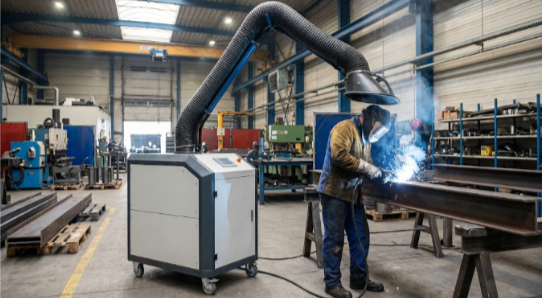
The choice between mobile units and stationary systems often determines a workspace’s operational flexibility. Every welding air purifier is designed to capture smoke and particulates, but how they integrate into the daily rhythm of a shop floor differs greatly. Understanding these distinctions helps facility managers invest in the correct infrastructure for their specific metal fabrication processes. 

The Role of Fixed Fume Extraction Systems

Fixed systems are permanent installations designed for high-volume, stationary workstations. These units are typically integrated into the building’s infrastructure and offer powerful, consistent suction for dedicated welding bays.

High-Volume Performance for Dedicated Bays

When welders work in the same location day after day, fixed units provide the most reliable capture method. These systems often utilize wall-mounted arms or overhead hoods connected to a central filtration unit or exhaust system. Because the motor and filtration components are often larger, they can handle heavier fume loads generated by intensive manufacturing processes. This setup ensures that contaminants are removed efficiently before they can disperse into the wider facility environment.

Integration with Facility Infrastructure

Installing fixed units requires planning around the shop’s physical layout. Ductwork must be routed effectively, and the capture arms need to be positioned precisely where the work occurs. Once installed, these systems become a seamless part of the building, requiring less daily setup than mobile counterparts. It is crucial to understand the best ways to ventilate a welding shop to determine if a permanent, centralized system is the most efficient choice for long-term operations. 

The Flexibility of Portable Welding Air Purifiers

Portable units offer versatility for shops where welding locations change frequently or where large workpieces make stationary arms impractical. These compact machines bring filtration directly to the source, wherever the welder is working. 

Adapting to Changing Workflows

In dynamic environments, such as repair shops or custom fabrication floors, work does not always happen in a booth. A portable extractor allows the operator to roll the filtration unit right up to a large chassis or assembly. This mobility eliminates the need for long, cumbersome hoses connected to a distant wall unit. The ability to move the extraction point ensures that safety protocols are maintained even when the work zone shifts across the facility floor.

Immediate Deployment and Ease of Use

Portable units require minimal installation time. They are typically plug-and-play solutions that can be deployed immediately where they are needed most. This is particularly useful for temporary projects or when supplementing existing ventilation during peak production periods. Professional-grade portable units are equipped with high-efficiency filters that handle Hexavalent Chromium and other dangerous byproducts, proving that mobility does not require sacrificing safety performance.

Conclusion

Selecting the right fume extraction strategy depends on balancing power and flexibility. Fixed systems offer robust, permanent solutions for consistent production lines, while portable units provide the adaptability required for varied tasks and changing layouts. Assessing the specific needs of your facility ensures that air quality remains a priority, protecting skilled workers and maintaining a safe, professional industrial environment. 

How Punch Technicians Help Accelerate Make-Ready Timelines

In multifamily properties, speed and quality have to work together, especially when units turn over quickly. A vacant unit may look like an open opportunity, but every extra day it sits unfinished can affect leasing momentum and revenue. Property teams often feel this pressure most during peak move-out seasons, when multiple apartments need attention at once. That is why punch technician staffing in Atlanta has become an essential solution for communities that need faster make-ready completion without sacrificing professional standards. Punch technicians play a specialized role, keeping timelines on track while helping properties maintain a move-in-ready experience.

Why make ready timelines matter more than ever

Make-ready work is one of the most time-sensitive parts of property operations. Every unit has a deadline, often tied to an upcoming move-in date. When teams fall behind, leasing schedules get disrupted, and resident satisfaction can take a hit. A smooth make-ready process also impacts reputation because prospects notice when show units are not fully prepared or when availability changes unexpectedly.

Properties that stay on schedule often have one key advantage: they prioritize consistency in every step of the turnover process. Instead of waiting until maintenance teams have time, they bring in specialized help that keeps progress moving and prevents small repair tasks from slowing down the entire timeline.

The common challenges that slow down unit turns

Many delays happen due to small but time-consuming details. Touch-up work, minor repairs, wall patching, fixture adjustments, trim fixes, and final cleaning preparation can add days if the team is overloaded. Even with a strong maintenance staff, there are times when the number of turns is simply too high for one crew to manage efficiently.

This is where punch technicians create immediate value. They focus on the finishing tasks that must be completed before a unit can be handed off as move-in ready, allowing other technicians to stay focused on larger work orders and critical system repairs.

What punch technicians do and why their work is specialized

Punch technicians support the final phase of unit readiness by handling detailed tasks that require speed, accuracy, and a strong eye for finish quality. Their work is not random or occasional; it is structured around completing the punch list items that prevent a unit from passing inspection or reaching leasing-ready condition.

A punch technician may handle wall repairs, hardware adjustments, basic fixture replacements, minor carpentry, flooring transitions, and other small repairs that make a major difference in presentation. These tasks may seem minor individually, but together they determine whether a unit feels polished or unfinished. For a closer look at the scope of the role, many property leaders understand what a punchout technician does and how these professionals support turnover speed and overall unit standards.

How punch technicians accelerate make-ready timelines

Punch technicians speed up turnovers by preventing bottlenecks. Instead of having a single maintenance team responsible for everything, properties can separate responsibilities to keep work flowing. When major repairs and finishing tasks happen simultaneously, units are completed faster and more consistently.

This approach also reduces pressure on onsite teams. Maintenance professionals are often pulled into emergency calls, resident requests, and HVAC or plumbing issues, which makes it harder to stay focused on make-ready work. Punch technicians provide dedicated turnover support, so progress does not stop when priorities shift.

Conclusion

Punch technicians play a critical role in helping apartment communities stay on schedule during make-ready cycles. By focusing on the finishing tasks that impact presentation and move-in readiness, they remove delays that can slow down unit turnover and disrupt leasing momentum. Their work supports faster timelines, better unit quality, and smoother coordination between maintenance and leasing teams. When properties invest in professional punch technician support, they create a more consistent turnover process that protects performance and strengthens the overall resident and prospect experience.

How a Magnetic Bit Holder Improves Efficiency on the Job

In the fast-paced environment of construction and DIY projects, maximizing efficiency is key to successful outcomes. One tool that has gained popularity among professionals and enthusiasts alike is the magnetic bit holder for drill. Its design not only simplifies the process of changing bits but also significantly enhances overall productivity. Understanding the ways in which this tool improves efficiency can lead to better performance on the job.

1. Quick Bit Changes

One of the standout features of a magnetic bit holder for drill is its ability to facilitate rapid bit changes. Traditional methods often require manual handling and alignment, which can be time-consuming and prone to error. With a magnetic holder, you can easily and swiftly switch out bits by simply placing or removing them from the holder. 

This quick-change functionality minimizes downtime, allowing you to transition seamlessly between different tasks. In jobs where multiple bits are needed, this efficiency can translate into substantial time savings.

2. Enhanced Stability

Stability is crucial when working with a drill, especially during intricate tasks. A magnetic bit holder for drill provides a secure grip that holds the bit firmly in place, significantly reducing the chances of slipping or wobbling. 

This stability enhances precision, making it easier for users to execute accurate drill holes or fasten screws tightly. When the bit stays secure, the likelihood of mistakes decreases, enabling workers to maintain focus and consistency throughout their projects.

3. Easy Access to Bits

A magnetic bit holder for drill contributes to better organization and accessibility in your workspace. By keeping drill bits securely attached to the tool itself, you ensure that they are always within reach. This eliminates the need for a cluttered toolbox or searching through drawers filled with bits. 

The convenience of having quick access to the necessary tools ensures that you can maintain momentum on the job, thereby enhancing overall efficiency and productivity.

4. Reduced Wear on Tools

Frequent bit changes can lead to wear and tear on both the bits and the drill itself. A magnetic bit holder for drill helps mitigate this risk by allowing smooth, controlled transitions. The secure connection minimizes the impact during bit changes, protecting both tools from potential damage. 

When tools are well-maintained, they operate more efficiently, requiring less frequent replacement. This not only saves money but also ensures you can rely on your equipment during critical projects.

5. Boosted Multitasking Abilities

In commercial settings, multitasking is often necessary to meet tight deadlines. A magnetic bit holder for drill enhances your ability to multitask by streamlining the drilling process. With bits readily available and securely attached, you can focus on the job without disruption. 

Whether you’re drilling into wood, metal, or masonry, having everything organized allows you to switch between tasks effortlessly. This agility can significantly improve your work pace and help you complete projects on time.

Conclusion

In conclusion, a magnetic bit holder for drill offers a multifaceted approach to improving efficiency on the job. From enabling quick bit changes and enhancing stability to providing easy access and reducing wear on tools, its advantages are manifold. 

If you are seeking to optimize your workflow and elevate your overall performance, integrating a magnetic bit holder into your toolkit is a practical decision that will yield considerable benefits in your daily tasks.

How Much Does a Measuring Borescope Cost?

If you’ve started shopping for a measuring borescope, you’ve probably noticed something immediately: pricing can feel all over the map. One system looks reasonable, another is dramatically higher, and a third seems similar, until you realize it includes measurement software, 3D capabilities, or a different probe configuration.

That price spread isn’t random. Measuring borescopes sit at the intersection of precision optics, rugged industrial design, and specialized software. Cost depends on what the scope can measure, how reliably it can do it, and how well it fits your inspection environment. For buyers who want to compare real-world options by category and capability, USA Borescopes provides a starting point to explore professional inspection systems, measurement tools, and support services in one place.

Typical Price Tiers

Exact pricing varies by brand, configuration, and included accessories, but measuring borescopes generally fall into tiers based on capability and intended use. The goal isn’t to memorize a single number; it’s to understand what you’re paying for at each level.

Entry-level inspection scopes (often non-measuring)

Many entry-level videoscopes are primarily for visual confirmation: checking for obvious blockages, verifying assembly, or locating clear damage. They can be useful for basic inspections, but they typically lack the measurement methods and software needed for reliable dimensional results.

Professional articulating videoscopes (visual-first, higher durability)

These systems emphasize improved image quality, articulation control, and ruggedness. Some may include basic measurement tools, but the measurement capability can be limited depending on how the system estimates depth or scale. They’re often a step up for frequent inspections where reliability and documentation matter, even if measurements are not the primary driver.

Measuring and 3D measurement systems (measurement-driven, premium tier)

This is where you typically see significant price increases. Dedicated measuring borescopes and 3D measurement videoscopes are built to generate more defensible measurement outputs, often with dedicated measurement modes, better calibration models, and reporting workflows designed around quantified inspections.

To get a clearer sense of what’s available in each tier, it helps to start with real product categories and configurations rather than generic pricing guesses. Browsing the USA Borescopes products page is a practical way to see how systems are positioned by capability, probe configuration, and measurement features.

The Biggest Cost Drivers

Two measuring borescopes can look similar at a glance but land far apart in price because of what’s under the hood. Here are the factors that most often move costs up or down.

Measurement technology: stereo vs. 3D mapping

Measurement capability is one of the biggest pricing levers. Systems that estimate depth more robustly or create a richer surface model typically cost more because they require:

  • More complex optics or sensor configurations
  • More sophisticated calibration and computation
  • More advanced software interfaces and reporting tools

If your workflow needs depth-aware measurements or 3D surface characterization, especially for complex geometry like blades, vanes, or contoured surfaces, expect that requirement to influence cost.

Probe diameter, working length, and articulation

Probe configuration impacts both manufacturing complexity and the real-world usability of the tool:

  • Smaller diameters often require tighter packaging and can increase cost, especially when paired with high-quality imaging and lighting.
  • Longer working lengths may require additional engineering for signal integrity and durability.
  • 4-way articulation or joystick articulation adds mechanical and control complexity, which can raise price, especially on systems designed for frequent professional use.

In many environments, probe choice also influences measurement success. Stable positioning and the ability to square up the camera angle often improve repeatability, which is part of the value equation.

Image quality, lighting, and durability

Higher-end systems typically include improvements that directly affect inspection results:

  • Better resolution and clarity for identifying edges and endpoints (critical for measurement cursor placement)
  • More controlled illumination to reduce glare and improve contrast
  • Greater durability for industrial or field-heavy use (better resistance to wear, impact, and harsh conditions)

If the scope will be used daily, in tough environments, or as part of an inspection program where downtime is costly, these upgrades are often worth factoring into the total cost, not just the purchase price.

Software, reporting, storage, and workflow features

A measuring borescope isn’t just a camera on a cable. The software matters because it shapes how quickly measurements are taken and how defensible the output is. Features that can influence cost include:

  • Measurement modes and tools (length, depth, area, profile, etc.)
  • Reporting templates and export options
  • Data management (image/video storage, labeling, annotations)
  • Ease of sharing results across teams

For organizations that require traceability, consistent documentation, or review workflows, software capabilities can be a primary justification for the investment.

Hidden Costs to Budget For

A common purchasing mistake is budgeting for the scope but not for the system around the scope. In practice, the total cost of ownership often includes:

  • Tips, adapters, and accessories
    Different applications require different optical tips, guide tubes, or protective components.
  • Consumables and protective items
    Protective sleeves, cleaning tools, storage cases, and spare parts can add up.
  • Training and standardization time
    Measurement is technique-sensitive. Building consistency may require training and internal process development.
  • Repair and downtime planning
    If the scope is mission-critical, you’ll want a plan for service support and minimizing downtime.

This is where service options can have a real financial impact over time. Rentals, repairs, and support programs can reduce disruption and help teams keep inspection capacity online. The USA Borescopes services page is a useful reference for organizations factoring support and lifecycle needs into their cost planning.

Buy vs. Rent vs. Outsource Inspection Work

Cost isn’t only about what you pay; it’s also about how frequently you use the tool and how critical it is to operations. Many organizations evaluate three pathways:

Buying: best for frequent use and standardized programs

Buying tends to make the most sense when:

  • Inspections are frequent and scheduled
  • Multiple teams rely on the tool
  • Documentation and trending are part of the ongoing workflow
  • The organization wants full control over availability and data capture

In these cases, cost can be justified as an investment in uptime, reduced teardown needs, and consistent inspection output.

Renting: smart for short-term needs or evaluation

Renting can be a strong option when:

  • You need measurement capability for a specific project or outage
  • You’re evaluating whether a premium measurement system is worth it
  • You have occasional inspection spikes and don’t want idle capital equipment

Rentals also help organizations avoid overbuying by letting them test the workflow and measurement reliability in their real environment before committing.

Outsourcing: practical for infrequent inspections or limited internal capacity

Outsourcing may fit when:

  • Inspections are rare and don’t justify ownership
  • Internal technicians aren’t available or trained for measurement workflows
  • The organization needs specialized inspection expertise for a specific component or issue

Some organizations use a hybrid approach: they own a general inspection scope while renting a measurement or 3D system only when needed.

If your team is weighing these pathways, it’s often helpful to look at service and support options alongside product selection. The USA Borescopes services page provides a clearer view of what support routes may be available depending on the situation.

How to Get the Best Value (Not Just the Lowest Price)

A measuring borescope is only worth it if it answers the inspection questions that matter to you. A few value-focused steps can help:

  • Start with the application, not the spec sheet. What are you measuring: cracks, pits, area damage, surface geometry?
  • Match probe configuration to access constraints. Diameter, length, and articulation control matter in real use.
  • Consider your environment. Field-heavy work often rewards ruggedness and fast workflows.
  • Standardize your approach. Repeatable measurements come from consistent technique and documentation habits.

If you’re aligning a purchase to your specific sector or inspection environment, reviewing use cases by category can help refine what features are actually necessary. 

So, how much does a measuring borescope cost? It depends primarily on measurement technology, probe configuration, durability, and the software/reporting workflow that turns inspection footage into defensible documentation. The right buying decision isn’t just about a number; it’s about selecting a system that fits your access constraints and produces measurement results you can use confidently.

For organizations comparing professional-grade measuring borescopes, USA Borescopes is positioned as a third-party resource for equipment selection and ongoing support. To explore options, start with products, and if you want to discuss your inspection requirements, configuration needs, or buy-versus-rent considerations, the next step is to contact them today.

About The Author

The author is an industry professional with experience evaluating inspection equipment for performance, cost, and long-term value. They work closely with maintenance and engineering teams to align inspection tools with real operational needs, budgeting constraints, and total cost of ownership considerations.

Conscientious Laptop Recycling Services

Solutions for Recycling Laptops

Ethical Management of End-of-Life

moral quit-ultra-modern-life management is a number one priority for our laptop recycling services in the UK. We guarantee a responsible and sustainable strategy, lowering environmental impact at the same time as shielding data safety, from secure facts deletion to environmentally friendly disposal.

Contribution of the Circular Economy

Our laptop recycling techniques prolong the lifestyles cycle cutting-edge devices, consistent with the circular economy. We assure an excellent environmental impact, inspire behaviors, and help conserve assets with the aid of renovating and reusing additives.

Reliable Laptop Recycling & Data Protection

Assurance of Data Security

Relaxed information destruction is part of today’s our pc recycling process that guarantees all sensitive records are eliminated. At some point in the recycling technique, adhering to industry requirements guarantees statistical safety, building confidence, and shielding your business enterprise’s reputation.

Practices for a Sustainable IT Lifecycle

Through assisting the circular economic system, our laptop recycling services are in line with sustainable IT lifecycle norms. We reduce digital waste, encourage f6ba901c5019ebe39975adc2eb223bef behaviors, and guarantee a beneficial impact on the environment and corporation by prolonging the lifestyles of the latest laptops via recycling and refurbishment.

Eco-Friendly Techniques for Disposal

To lessen our affect at the surroundings, we recycle computer systems ethically and provide precedence to IT disposal services in the UK. With a view to ensuring that the recycling method complies with enterprise requirements and supports environmental sustainability, our processes follow moral recycling criteria.

Open Reporting and Adherence

Transparent reporting and compliance office work are supplied via our pc recycling services. In-depth reviews that designate the recycling method help your business enterprise display its commitment to ethical e-waste management and corporate social responsibility.

Benefits

Secure

You may depend on seasoned experts with decades of brand-new experience in the field to deal with the digital waste. We’re ultra-modern, with the delicate stability needed to control WEEE responsibly, ensuring that every device is treated with the best care.

Convenient

We provide tailor-made answers to fulfill your WEEE recycling wishes when you consider that we remember the fact that every enterprise is specific. Our offerings are tailor-made to the size and ultra-modern digital waste disposal wishes, no matter your business enterprise’s size—from small start-united states of americato large organizations.

Efficient

via the implementation of ultra-modern “Your WEEE, Our knowledge,” we’re devoted to shielding your statistics as well as properly recycling electronic trash. You can experience secure understanding that your private statistics are permanently erased thanks to our advanced records destruction techniques.

How Drone Technology Is Changing the Way We See the World?

The past few years have seen the rapid increase of drone technology. An item that began as a hobbyist package has become used in numerous industries. Drones help us to make pictures, collect data, and work in more secure conditions. They give us a different way in which we view the world in an inverted manner. This new way of thinking alters the way we develop, discover, and resolve issues.

A New Way to Capture Photos and Videos

Photography and videography have been transformed by drones. Earlier, in order to get some aerial shots, one had to hire a helicopter or use a plane. With the fact that anyone can now buy a drone and learn how to operate it, there is also an opportunity to shoot high-quality shots of the sky.

 It simplifies the process of capturing spectacular panoramas by filmmakers, travellers, and content makers. Drones can carry out flights in limited spaces, fly in them, and also take angles, which were not possible before.

Helping Businesses Work Faster and Smarter

Drones have become beneficial to many industries in terms of saving time and reducing risk. They are used by real estate agents to attract panoramic views of houses. Drones are utilized to survey crops and growth by farmers. They help the construction crews to monitor their developments and these areas that are not reachable.

These activities would require hours or even days. The same work can be achieved in minutes with the help of a drone. This velocity aids businesses to make superior decisions, prepare more properly, and remain proactive to troubles.

Improving Safety in Dangerous Jobs

Some jobs are dangerous to the individual, particularly when it comes to mining, power, or even emergency services. Drones will save the workers the burden of entering unsafe areas.

 As an example, a drone can survey a storm-damaged building. It may make flights around a wildfire to assist the firefighters in knowing where the fire is heading. Drones are utilized by power companies to check high towers, without sending people to check them.

Supporting Search, Rescue, and Emergency Response

Drones are gaining relevance among the rescuers. They have the ability to travel in a fast manner, covering extensive localities as well as accessing locations that are hard to access by human beings.

 In times of disaster, drones are useful in search of missing individuals, damaged roads, and the transfer of supplies. Their cameras can give them clear scenes on the ground, even in a difficult environment.

This rapid piece of information assists teams in being on their feet and saves lives. The technology is also still advancing, and this renders drones even more beneficial in cases of emergencies.

Changing the Way We Explore the Environment

Drones allow us to observe the Earth from a new perspective. They are used by scientists to keep a track of wildlife, study forests, and track oceans. They are used in the quantification of climate changes and the observation of natural patterns, and the changes over a time span.

Such perceptions used to be difficult to obtain. Today the drones allow gathering precise information without disturbances to nature. They make us better understand the environment and use it in a more effective way.