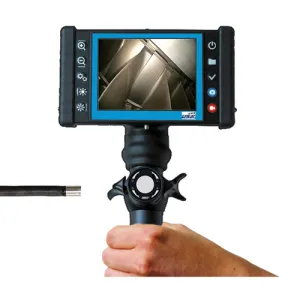
If you’ve started shopping for a measuring borescope, you’ve probably noticed something immediately: pricing can feel all over the map. One system looks reasonable, another is dramatically higher, and a third seems similar, until you realize it includes measurement software, 3D capabilities, or a different probe configuration.
That price spread isn’t random. Measuring borescopes sit at the intersection of precision optics, rugged industrial design, and specialized software. Cost depends on what the scope can measure, how reliably it can do it, and how well it fits your inspection environment. For buyers who want to compare real-world options by category and capability, USA Borescopes provides a starting point to explore professional inspection systems, measurement tools, and support services in one place.
Typical Price Tiers
Exact pricing varies by brand, configuration, and included accessories, but measuring borescopes generally fall into tiers based on capability and intended use. The goal isn’t to memorize a single number; it’s to understand what you’re paying for at each level.
Entry-level inspection scopes (often non-measuring)
Many entry-level videoscopes are primarily for visual confirmation: checking for obvious blockages, verifying assembly, or locating clear damage. They can be useful for basic inspections, but they typically lack the measurement methods and software needed for reliable dimensional results.
Professional articulating videoscopes (visual-first, higher durability)
These systems emphasize improved image quality, articulation control, and ruggedness. Some may include basic measurement tools, but the measurement capability can be limited depending on how the system estimates depth or scale. They’re often a step up for frequent inspections where reliability and documentation matter, even if measurements are not the primary driver.
Measuring and 3D measurement systems (measurement-driven, premium tier)
This is where you typically see significant price increases. Dedicated measuring borescopes and 3D measurement videoscopes are built to generate more defensible measurement outputs, often with dedicated measurement modes, better calibration models, and reporting workflows designed around quantified inspections.
To get a clearer sense of what’s available in each tier, it helps to start with real product categories and configurations rather than generic pricing guesses. Browsing the USA Borescopes products page is a practical way to see how systems are positioned by capability, probe configuration, and measurement features.
The Biggest Cost Drivers
Two measuring borescopes can look similar at a glance but land far apart in price because of what’s under the hood. Here are the factors that most often move costs up or down.
Measurement technology: stereo vs. 3D mapping
Measurement capability is one of the biggest pricing levers. Systems that estimate depth more robustly or create a richer surface model typically cost more because they require:
- More complex optics or sensor configurations
- More sophisticated calibration and computation
- More advanced software interfaces and reporting tools
If your workflow needs depth-aware measurements or 3D surface characterization, especially for complex geometry like blades, vanes, or contoured surfaces, expect that requirement to influence cost.
Probe diameter, working length, and articulation
Probe configuration impacts both manufacturing complexity and the real-world usability of the tool:
- Smaller diameters often require tighter packaging and can increase cost, especially when paired with high-quality imaging and lighting.
- Longer working lengths may require additional engineering for signal integrity and durability.
- 4-way articulation or joystick articulation adds mechanical and control complexity, which can raise price, especially on systems designed for frequent professional use.
In many environments, probe choice also influences measurement success. Stable positioning and the ability to square up the camera angle often improve repeatability, which is part of the value equation.
Image quality, lighting, and durability
Higher-end systems typically include improvements that directly affect inspection results:
- Better resolution and clarity for identifying edges and endpoints (critical for measurement cursor placement)
- More controlled illumination to reduce glare and improve contrast
- Greater durability for industrial or field-heavy use (better resistance to wear, impact, and harsh conditions)
If the scope will be used daily, in tough environments, or as part of an inspection program where downtime is costly, these upgrades are often worth factoring into the total cost, not just the purchase price.
Software, reporting, storage, and workflow features
A measuring borescope isn’t just a camera on a cable. The software matters because it shapes how quickly measurements are taken and how defensible the output is. Features that can influence cost include:
- Measurement modes and tools (length, depth, area, profile, etc.)
- Reporting templates and export options
- Data management (image/video storage, labeling, annotations)
- Ease of sharing results across teams
For organizations that require traceability, consistent documentation, or review workflows, software capabilities can be a primary justification for the investment.
Hidden Costs to Budget For
A common purchasing mistake is budgeting for the scope but not for the system around the scope. In practice, the total cost of ownership often includes:
- Tips, adapters, and accessories
Different applications require different optical tips, guide tubes, or protective components.
- Consumables and protective items
Protective sleeves, cleaning tools, storage cases, and spare parts can add up.
- Training and standardization time
Measurement is technique-sensitive. Building consistency may require training and internal process development.
- Repair and downtime planning
If the scope is mission-critical, you’ll want a plan for service support and minimizing downtime.
This is where service options can have a real financial impact over time. Rentals, repairs, and support programs can reduce disruption and help teams keep inspection capacity online. The USA Borescopes services page is a useful reference for organizations factoring support and lifecycle needs into their cost planning.
Buy vs. Rent vs. Outsource Inspection Work
Cost isn’t only about what you pay; it’s also about how frequently you use the tool and how critical it is to operations. Many organizations evaluate three pathways:
Buying: best for frequent use and standardized programs
Buying tends to make the most sense when:
- Inspections are frequent and scheduled
- Multiple teams rely on the tool
- Documentation and trending are part of the ongoing workflow
- The organization wants full control over availability and data capture
In these cases, cost can be justified as an investment in uptime, reduced teardown needs, and consistent inspection output.
Renting: smart for short-term needs or evaluation
Renting can be a strong option when:
- You need measurement capability for a specific project or outage
- You’re evaluating whether a premium measurement system is worth it
- You have occasional inspection spikes and don’t want idle capital equipment
Rentals also help organizations avoid overbuying by letting them test the workflow and measurement reliability in their real environment before committing.
Outsourcing: practical for infrequent inspections or limited internal capacity
Outsourcing may fit when:
- Inspections are rare and don’t justify ownership
- Internal technicians aren’t available or trained for measurement workflows
- The organization needs specialized inspection expertise for a specific component or issue
Some organizations use a hybrid approach: they own a general inspection scope while renting a measurement or 3D system only when needed.
If your team is weighing these pathways, it’s often helpful to look at service and support options alongside product selection. The USA Borescopes services page provides a clearer view of what support routes may be available depending on the situation.
How to Get the Best Value (Not Just the Lowest Price)
A measuring borescope is only worth it if it answers the inspection questions that matter to you. A few value-focused steps can help:
- Start with the application, not the spec sheet. What are you measuring: cracks, pits, area damage, surface geometry?
- Match probe configuration to access constraints. Diameter, length, and articulation control matter in real use.
- Consider your environment. Field-heavy work often rewards ruggedness and fast workflows.
- Standardize your approach. Repeatable measurements come from consistent technique and documentation habits.
If you’re aligning a purchase to your specific sector or inspection environment, reviewing use cases by category can help refine what features are actually necessary.
So, how much does a measuring borescope cost? It depends primarily on measurement technology, probe configuration, durability, and the software/reporting workflow that turns inspection footage into defensible documentation. The right buying decision isn’t just about a number; it’s about selecting a system that fits your access constraints and produces measurement results you can use confidently.
For organizations comparing professional-grade measuring borescopes, USA Borescopes is positioned as a third-party resource for equipment selection and ongoing support. To explore options, start with products, and if you want to discuss your inspection requirements, configuration needs, or buy-versus-rent considerations, the next step is to contact them today.
About The Author
The author is an industry professional with experience evaluating inspection equipment for performance, cost, and long-term value. They work closely with maintenance and engineering teams to align inspection tools with real operational needs, budgeting constraints, and total cost of ownership considerations.